
Case study / TeleHealth Van
TeleHealth Van delivers no-cost virtual mental health services to underserved communities. By combining mobile vans with doxy.me’s telehealth platform, care remains accessible despite barriers like transportation, housing, or clinic access.
Results
Improving access to healthcare
A better patient experience
Speciality
Mental Health
Patient population
Underserved and vulnerable communities across California
Care delivery model
Virtual
1,000+
Free therapy sessions every month
20
Telehealth vans
$0
Cost to patients
The challenge: reaching people left out of traditional mental health systems
Many people who most need mental health support face systemic barriers to care: lack of transportation, unstable housing, language and cultural obstacles, difficulty scheduling clinic visits, or no insurance coverage. Traditional clinic-based mental health services often fail to reach these populations, leaving large segments of vulnerable communities underserved.
TeleHealth Van founder Dion Rambo recognized that expanding access to mental health care required a fundamentally different approach—one that brings care directly to people, rather than expecting people to come to a clinic. Delivering culturally competent, compassionate care in underserved communities demands more than appointments alone. It requires outreach, trust, flexibility, and a care model that removes as many barriers as possible, including cost, privacy concerns, transportation, and the digital divide.
“I believe that if a person creates any company, they should be strong where they live first.”


Dion Rambo
Founder and CEO of TeleHealth Vans
Achieving success with doxy.me
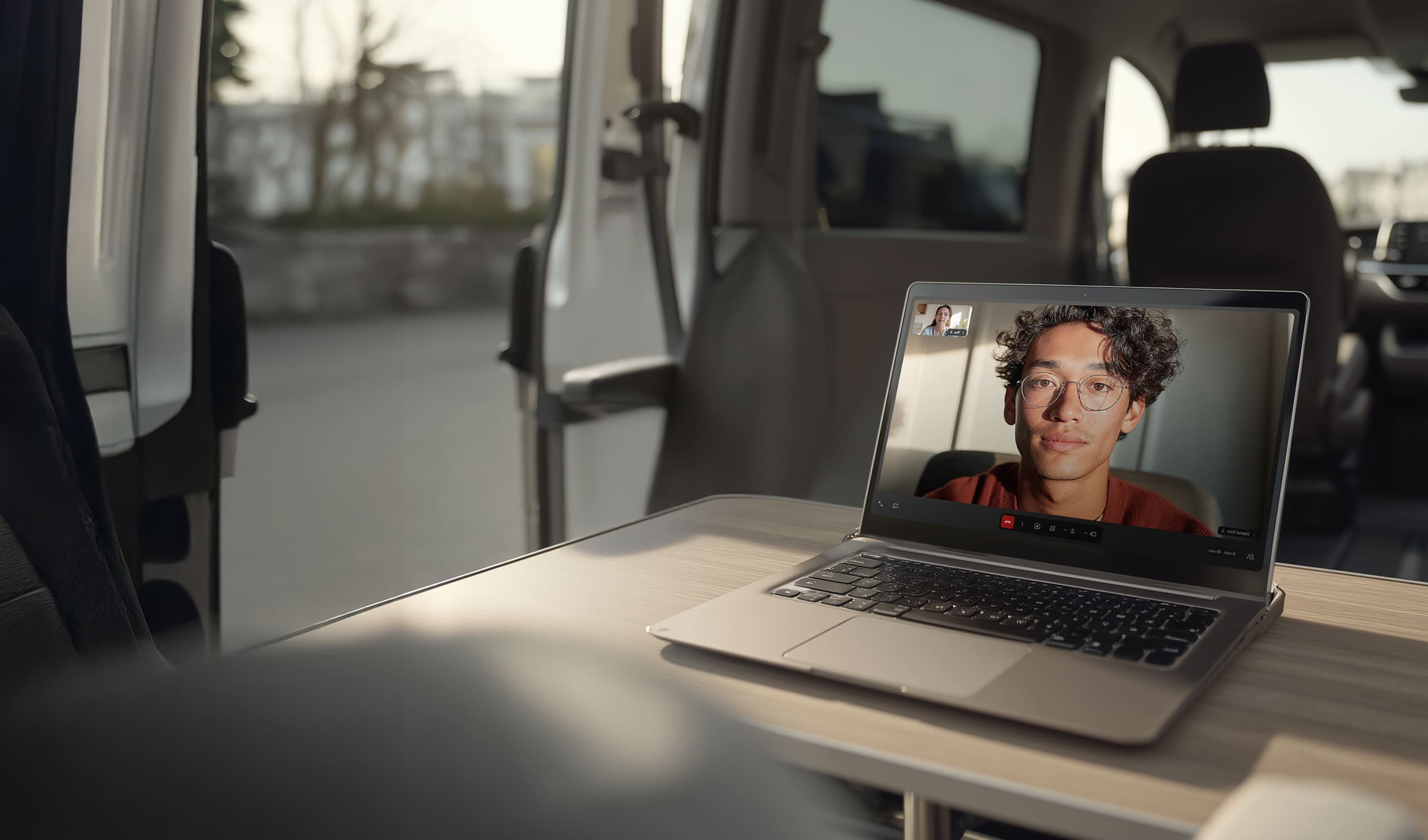
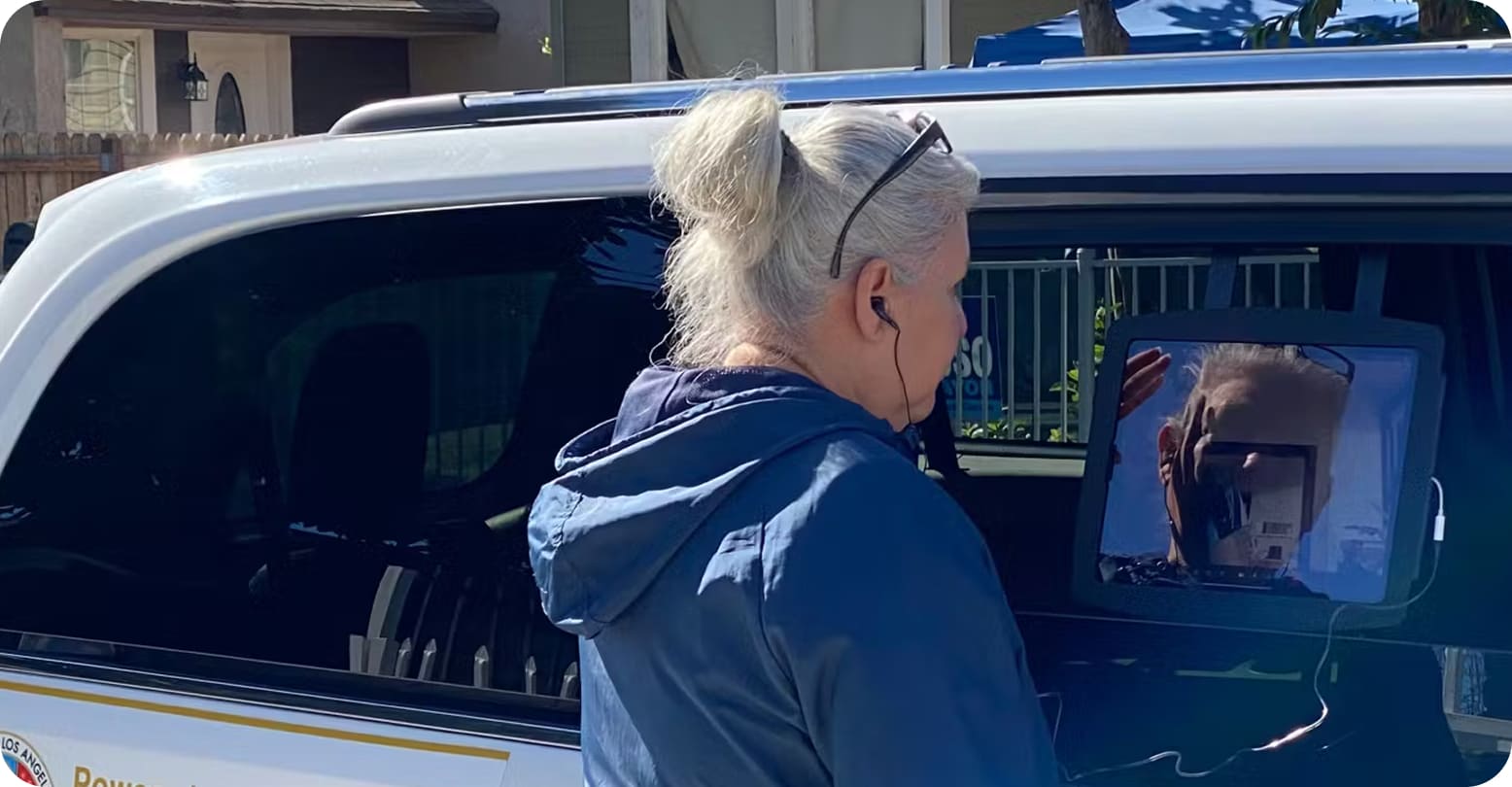
TeleHealth Van partnered with doxy.me to power a mobile mental health care model that delivers no-cost, virtual therapy directly within underserved communities. Mobile vans are equipped with private, 5G-enabled booths, allowing individuals to connect with licensed therapists through secure, confidential video visits—quickly and without cost.
Services are offered in multiple formats to meet people where they are:
Walk-up sessions for spontaneous, anonymous support
Scheduled sessions at parked van locations
Door-to-door visits for individuals unable to travel
Because doxy.me supports features such as secure video visits, virtual waiting rooms, and live interpretation, TeleHealth Van can effectively serve people facing language, cultural, or digital-literacy barriers—making mental health care more inclusive and accessible.
Building trust through community presence
Trust is essential when delivering care in underserved communities. TeleHealth Van establishes familiarity by maintaining a visible, consistent presence. Vans regularly visit key community locations, helping residents recognize and feel comfortable with the service.
This community-first approach extends to care delivery. When the U.S. military partnered with TeleHealth Van to provide mental health services to Afghan refugees at multiple bases, Rambo and his team sourced culturally competent therapists fluent in Pashto and Dari—ensuring care aligned with patients’ cultural expectations.
To encourage ongoing engagement, TeleHealth Van also supports continuity of care through practical incentives. Clients receive grocery store gift cards after every five visits, helping prioritize mental health even when immediate daily needs compete for attention.
Strong partnerships further expand reach. TeleHealth Van collaborates with organizations such as Goodwill, local colleges, addiction recovery centers, and government agencies including the City of Hawthorne and the Los Angeles County Department of Mental Health—often relying on these partners to identify individuals in need of support.
The impact: scalable, equitable mental health care
By combining mobile outreach with doxy.me’s telehealth platform, TeleHealth Van significantly expands access to mental health care for people who might otherwise go untreated. Thousands of free therapy sessions are delivered each month through a flexible, culturally responsive model that reaches individuals without transportation, stable housing, or insurance.
“I think we're normalizing therapy because now it's not odd,” said Rambo. “We're not making it like something's wrong with you. It's more like, sometimes you just need to get something off your chest.”
Dion Rambo
Founder and CEO of TeleHealth Vans
This approach directly addresses common barriers to mental health care—cost, access, stigma, and logistics—making support more equitable and far-reaching. With doxy.me, TeleHealth Van demonstrates a scalable, sustainable, and compassionate path to delivering mental health care where it’s needed most.